Advanced Bodyweight Training: Build Strength in 2026
Advertisements
Advanced bodyweight training in 2026 offers a potent path to serious strength, utilizing only your body to unlock unparalleled physical capabilities and fitness gains.
Are you ready to redefine your understanding of strength and fitness? In 2026, embracing advanced bodyweight training is your ultimate ticket to building serious muscle and functional power without a single piece of equipment. Forget crowded gyms and expensive memberships; your body is the only tool you truly need to achieve remarkable physical transformations.
The Evolution of Bodyweight Training
Bodyweight training, often seen as a beginner's entry into fitness, has evolved dramatically. What was once confined to basic push-ups and squats now encompasses a vast array of challenging movements that demand incredible strength, balance, and control. This evolution reflects a growing understanding that mastering one's own body weight is the foundation of true athleticism and sustainable fitness.
Historically, calisthenics—the art of using bodyweight for exercise—has been practiced across cultures for centuries. From ancient Greek warriors to modern-day gymnasts, the emphasis on body mastery has remained constant. Today, innovations in exercise science and a deeper dive into biomechanics have pushed the boundaries, allowing for progressions that challenge even the most seasoned athletes.
Why choose advanced bodyweight training?
- Accessibility: No equipment or gym membership required, making it perfect for home or travel.
- Functional Strength: Develops strength that translates directly to everyday movements and other sports.
- Injury Prevention: Often promotes better joint health and stability due to natural movement patterns.
- Body Awareness: Enhances proprioception and control, improving overall coordination.

The beauty of advanced bodyweight training lies in its scalability. Every exercise has multiple variations, allowing you to progressively increase difficulty as your strength improves. This ensures continuous challenge and growth, preventing plateaus and keeping your workouts engaging and effective. It's not just about getting stronger; it's about becoming more resilient, agile, and in tune with your body's capabilities.
Ultimately, the journey through advanced bodyweight training is a testament to human potential. It proves that with dedication and intelligent progression, you can forge an incredibly strong and capable physique using nothing more than your own resistance. This approach fosters a deeper connection to your physical self, transforming not just your body but also your mental fortitude and discipline.
Mastering the One-Arm Push-Up
The one-arm push-up is a benchmark of upper body strength and core stability. It requires significant unilateral strength, meaning one side of your body works independently, which is crucial for balanced development. This exercise goes beyond simply pushing; it engages your entire kinetic chain to maintain proper form and prevent rotation.
To truly master the one-arm push-up, a solid foundation of standard push-ups and single-arm plank holds is essential. Begin by perfecting your two-arm push-up form, ensuring your body remains a straight line from head to heels. Once you can comfortably perform multiple sets of standard push-ups, you can start incorporating progressions that gradually shift more weight onto one arm.
Progressions for the one-arm push-up
- Wall or Incline One-Arm Push-Ups: Start with your hands on a wall or elevated surface to reduce the load.
- Eccentric One-Arm Push-Ups: Control the lowering phase with one arm, then push back up with two.
- One-Arm Push-Ups with Wide Stance: A wider foot stance provides a larger base of support, making the exercise easier.
- Leveraged One-Arm Push-Ups: Place your non-working hand on a tennis ball or slightly elevated surface to assist.
As you progress, gradually decrease the assistance or incline, focusing on maintaining a rigid core and preventing your hips from sagging or rotating. The goal is to keep your shoulders level and your body straight throughout the entire movement. Consistency and patience are key; rushing the progression can lead to improper form and potential injury.
The one-arm push-up is not just a display of strength; it significantly enhances core stability, shoulder health, and proprioception. By engaging the obliques and deep abdominal muscles, it builds a robust foundation that supports all other movements. Integrating this exercise into your routine will elevate your overall upper body and core strength, making other advanced bodyweight movements more accessible.
The Challenging Pistol Squat
The pistol squat stands as a pinnacle of lower body strength, balance, and mobility. This unilateral leg exercise requires immense control, flexibility in the ankles and hips, and powerful quadriceps and glutes. It's a full-body movement that challenges your stability from the ground up, making it a highly effective exercise for functional leg development.
Before attempting a full pistol squat, ensure you have adequate ankle dorsiflexion and hip mobility. Many individuals struggle with the depth and balance, not due to lack of strength, but due to mobility restrictions. Incorporate ankle mobility drills and hip flexor stretches into your warm-up routine to prepare your body.
Effective pistol squat progressions
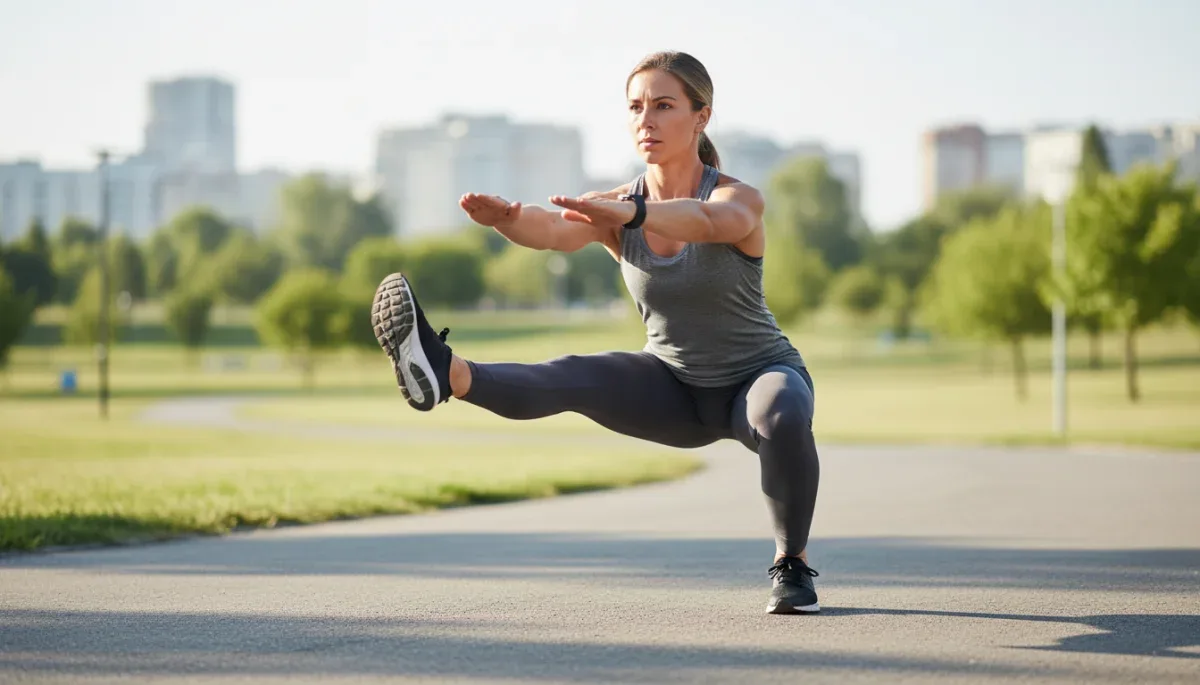
- Assisted Pistol Squats: Use a TRX, resistance band, or sturdy object for support to control the descent and ascent.
- Box Pistol Squats: Squat onto a box or bench, gradually lowering the height as you gain strength and control.
- Counterbalance Pistol Squats: Hold a light weight (like a small dumbbell or even a water bottle) out in front of you to help maintain balance.
- Eccentric Pistol Squats: Slowly lower yourself into the squat position on one leg, then use both legs to stand back up.
Focus on keeping your chest up, your core engaged, and your non-working leg extended straight forward without touching the ground. The depth of the squat is crucial; aim for your hip crease to go below your knee. This ensures full range of motion and maximum muscle activation. Practice regularly, even if it's just a few repetitions each day, to build the necessary strength and coordination.
Mastering the pistol squat not only builds impressive leg strength but also significantly improves balance and coordination, which are vital for athletic performance and daily life. It forces each leg to work independently, correcting any muscular imbalances and enhancing overall lower body resilience. This exercise is a game-changer for anyone serious about developing comprehensive leg power without external weights.
Human Flag: Ultimate Core and Upper Body Strength
The human flag is arguably one of the most impressive feats of bodyweight strength, demanding incredible core stability, shoulder strength, and grip power. It involves holding your entire body horizontally, supported only by your hands gripping a vertical pole. This exercise is a true test of isometric strength and full-body tension.
Achieving the human flag requires a progressive training approach that builds strength in key areas. Focus on developing a strong foundation in exercises like pull-ups, chin-ups, and various plank variations. Core strength, particularly in the obliques, is paramount, as these muscles work to prevent your body from sagging.
Key exercises for human flag development
- Side Plank Variations: Progress from standard side planks to weighted or elevated variations to build oblique strength.
- Tuck Flag: Start by holding a tucked position with knees bent towards your chest, reducing the lever arm.
- One-Arm Hangs and Scapular Pull-Ups: Strengthen your grip and shoulder girdle stability.
- Human Flag Negatives: Slowly lower yourself from an assisted human flag position, focusing on control.
When practicing, remember to engage your lats, shoulders, and core intensely. Your bottom arm should be pushing against the pole, while your top arm pulls. The goal is to keep your body as straight and horizontal as possible. Consistency in these accessory exercises and gradual progression are vital for safely working towards this advanced skill.
The human flag is more than just a show of strength; it cultivates an extraordinary level of body control and awareness. It pushes the limits of what your body can achieve without external resistance, fostering a deep sense of accomplishment. Incorporating human flag training into your routine will dramatically enhance your isometric strength, shoulder stability, and overall core power, making you a more capable and resilient athlete.
The Mighty Front Lever
The front lever is a highly sought-after calisthenics skill that showcases exceptional back, core, and arm strength. It involves holding your body horizontally, face-up, with straight arms gripping a bar, making it an incredible display of anti-extension strength and posterior chain activation. This exercise demands full-body tension and precise muscular coordination.
Building up to the front lever requires dedicated training in foundational exercises that target the lats, shoulders, and core. Strong pull-ups and straight arm scapular depressions are crucial prerequisites, as they develop the necessary pulling strength and shoulder stability. Your core, especially the rectus abdominis, must be exceptionally strong to prevent your hips from dropping.
Front lever progression steps
- Tuck Front Lever: Start by holding your body in a tucked position, with knees pulled to your chest.
- Advanced Tuck Front Lever: Extend your hips slightly, moving your knees further away from your body while maintaining the tucked shape.
- One-Leg Front Lever: Extend one leg straight while keeping the other tucked, alternating legs.
- Straddle Front Lever: Spread your legs wide apart, reducing the lever arm and making it easier than a full front lever.
Throughout each progression, focus on keeping your arms completely straight and your body rigid. The goal is to maintain a perfectly horizontal line from your shoulders to your feet, without any sag in the hips. Practice holding each progression for time, aiming for sets of 10-20 seconds before moving to the next stage.
Achieving the front lever is a monumental accomplishment in advanced bodyweight training, demonstrating superior back and core strength. It significantly enhances overall body tension and control, which translates to improved performance in many other physical activities. This exercise not only builds immense strength but also fosters incredible discipline and body awareness, pushing you to master your own physical capabilities.
Handstand Push-Ups: Overhead Strength Redefined
The handstand push-up is an advanced bodyweight exercise that builds incredible overhead pressing strength and shoulder stability. It's essentially a vertical push-up performed while inverted, requiring a solid handstand balance and immense triceps, shoulder, and upper chest power. This movement challenges your body in a unique way, demanding both strength and spatial awareness.
Before attempting handstand push-ups, you must master a stable handstand hold against a wall. This builds the necessary wrist conditioning, shoulder stability, and confidence in an inverted position. Strong overhead presses with dumbbells or barbells can also help build the prerequisite strength, but bodyweight-specific training is key for transferability.
Progressions for handstand push-ups
- Pike Push-Ups: Start with your hips elevated and hands on the floor, pressing your head towards the ground.
- Elevated Pike Push-Ups: Place your feet on an elevated surface (like a chair) to increase the load on your shoulders.
- Wall Handstand Holds: Practice holding a handstand against a wall to build endurance and stability.
- Handstand Push-Ups with Abmat/Pillows: Reduce the range of motion by placing an abmat or pillows under your head.
When performing handstand push-ups, maintain a hollow body position, keeping your core tight and preventing your back from arching. Lower your head towards the ground in a controlled manner, and then powerfully press back up to the starting handstand position. Breathing control and full engagement of your shoulders and triceps are critical for successful execution.
Mastering the handstand push-up is a significant milestone in advanced bodyweight training, demonstrating superior upper body strength and control. It develops powerful shoulders and triceps, crucial for both aesthetic and functional fitness goals. This exercise not only builds raw pushing strength but also enhances balance, coordination, and body awareness, making you a more proficient and capable athlete.
Integrating Advanced Bodyweight Training into Your Routine
Successfully incorporating these advanced bodyweight exercises into your fitness regimen requires careful planning and a commitment to progressive overload. It's not about doing everything at once, but rather systematically building strength and skill over time. Consistency is far more important than intensity when aiming for long-term mastery.
Begin by selecting one or two advanced movements that align with your current strength levels and fitness goals. Dedicate specific training days to these exercises, allowing ample recovery time between sessions. Remember that advanced bodyweight training places significant demands on your central nervous system, so proper rest and nutrition are non-negotiable.
Tips for effective integration
- Structured Programming: Follow a periodized plan that includes warm-ups, skill work, strength sets, and cool-downs.
- Listen to Your Body: Pay attention to signs of overtraining or fatigue and adjust your training volume accordingly.
- Cross-Training: Complement your bodyweight training with mobility work, stretching, and perhaps some light cardio.
- Nutrition and Recovery: Prioritize a balanced diet rich in protein and ensure adequate sleep for muscle repair and growth.
Consider implementing a split routine, where you focus on different muscle groups or movement patterns on separate days. For example, one day could be dedicated to pushing movements (one-arm push-ups, handstand push-ups), and another to pulling and core (front lever, human flag). Leg day could feature pistol squats and other unilateral leg exercises.
The journey to mastering advanced bodyweight movements is a marathon, not a sprint. Celebrate small victories, stay consistent with your training, and embrace the process of continuous improvement. With dedication, these exercises will not only build an incredibly strong physique but also instill discipline, resilience, and a profound sense of accomplishment.
| Key Exercise | Primary Focus |
|---|---|
| One-Arm Push-Up | Unilateral upper body strength, core stability |
| Pistol Squat | Unilateral leg strength, balance, mobility |
| Human Flag | Oblique, shoulder, and grip strength |
| Front Lever | Back, core, and arm isometric strength |
Frequently Asked Questions About Advanced Bodyweight Training
How long does it take to master these advanced bodyweight exercises?▼Mastery varies greatly among individuals, depending on current fitness levels, consistency, and dedication. Generally, it can take anywhere from several months to a few years to achieve full proficiency in exercises like the human flag or front lever. Patience and consistent practice are far more critical than speed.
Can I build significant muscle mass with only bodyweight training?▼Absolutely. Advanced bodyweight training, especially with challenging exercises and proper progression, can stimulate significant muscle growth. The key is to continuously increase the difficulty, volume, or decrease rest times to provide a progressive overload stimulus, similar to weightlifting. Nutrition and recovery are also crucial for hypertrophy.
What is the most important factor for success in advanced bodyweight training?▼Consistency and proper form are the most critical factors. Regularly practicing the progressions with correct technique not only prevents injury but also ensures effective muscle activation and skill acquisition. Without consistency, progress will be slow, and without proper form, you risk developing imbalances or injuries.
Do I need any equipment for advanced bodyweight training?▼While many advanced bodyweight exercises are truly no-equipment, having access to a pull-up bar or a sturdy vertical pole can greatly expand your exercise repertoire, especially for movements like the front lever and human flag. However, a significant amount of strength can still be built with zero equipment.
How often should I train advanced bodyweight exercises?▼For advanced exercises, training 3-4 times per week is generally recommended, allowing sufficient rest for muscle recovery and central nervous system recuperation. It's beneficial to split your training days to focus on different muscle groups or movement patterns, preventing overtraining and optimizing gains.
Conclusion
As we navigate 2026, the potential of advanced bodyweight training to build serious strength without equipment is clearer than ever. By mastering challenging movements like the one-arm push-up, pistol squat, human flag, front lever, and handstand push-up, you unlock a profound level of functional fitness, body control, and mental resilience. This journey is a testament to the incredible capabilities of the human body, proving that dedication, smart progression, and consistent effort are all you need to achieve remarkable physical transformations. Embrace the challenge, and redefine what's possible for your strength and fitness.