Early Detection: Saving US Households $1,200 Annually
Advertisements

Preventive health and early disease detection significantly reduce healthcare expenditures for US households, averting costly advanced treatments and saving an average of $1,200 annually.
Have you ever considered the profound impact that proactive health decisions can have on your wallet? The early detection financial impact on US households is substantial, translating to an average annual saving of $1,200. This isn't merely about avoiding illness; it's about safeguarding your financial future through intelligent health management.
Understanding the Financial Burden of Late Diagnosis
Late diagnosis often leads to more aggressive and expensive treatments, significantly escalating healthcare costs for individuals and families. When health issues are identified in advanced stages, the options for less invasive and cheaper interventions diminish rapidly, placing a heavy burden on household finances.
Consider chronic conditions like diabetes, heart disease, or certain cancers. If these are not caught early, they can necessitate complex surgeries, prolonged hospital stays, and continuous medication regimens, all of which come with hefty price tags. These costs don't just affect the uninsured; even those with comprehensive insurance plans can face substantial deductibles, co-pays, and out-of-pocket maximums that can quickly deplete savings.
The escalating costs of advanced disease
- Specialized treatments: Advanced-stage diseases often require highly specialized and expensive treatments, such as chemotherapy, radiation, organ transplants, or complex surgical procedures, which are far more costly than early interventions.
- Extended hospital stays: Complications arising from late diagnoses can lead to longer hospitalizations, with daily charges for rooms, nursing care, and ancillary services adding up quickly.
- Loss of income: Patients and their caregivers may experience significant loss of income due to time off work for treatment and recovery, further straining household budgets.
- Rehabilitation and long-term care: Post-treatment, many individuals require extensive rehabilitation or long-term care, incurring additional expenses that can last for years.
Ultimately, the financial burden of late diagnosis extends beyond direct medical costs, impacting productivity, quality of life, and overall financial stability, underscoring the critical value of preventive care.
The Power of Preventive Screenings and Check-ups
Preventive screenings and regular check-ups are cornerstones of early detection, offering a proactive approach to health management that can yield significant financial benefits. These routine visits allow healthcare providers to identify potential health issues before they become serious, often when they are most treatable and less costly to manage.
For instance, annual physicals, blood pressure screenings, cholesterol checks, and cancer screenings like mammograms and colonoscopies can detect anomalies early. By doing so, they enable interventions that are typically simpler, less invasive, and considerably more affordable than treating advanced conditions. Many insurance plans cover these preventive services at little to no out-of-pocket cost, making them an accessible and financially smart choice.
Key preventive measures and their benefits
- Annual physical exams: These allow for a comprehensive overview of your health, identifying risks for chronic diseases early.
- Vaccinations: Protecting against infectious diseases prevents costly treatments and lost workdays.
- Blood pressure and cholesterol checks: Regular monitoring helps manage cardiovascular risks before they lead to heart attacks or strokes.
- Cancer screenings: Mammograms, Pap tests, and colonoscopies can detect cancers at early, highly treatable stages, drastically reducing treatment costs and improving survival rates.
Investing time in preventive care is not just an investment in your health; it is a strategic financial decision that can save thousands of dollars in potential future medical expenses.
Case Studies: Real-World Savings from Early Detection
Examining specific scenarios highlights how early detection translates into tangible financial savings for US households. These real-world examples illustrate the stark contrast in costs between early intervention and delayed treatment across various health conditions.
Consider a hypothetical individual who detects high blood pressure during a routine check-up. With lifestyle changes and affordable medication, they manage their condition, preventing a potential stroke or heart attack that could cost tens of thousands of dollars in emergency care, hospitalization, and rehabilitation. Another example might be a woman who undergoes regular mammograms, leading to the early discovery of a small tumor. Her treatment could involve a less invasive surgery and potentially no chemotherapy, a far less expensive and less debilitating path than if the cancer were found at a later stage, requiring extensive and costly interventions.
Illustrative examples of financial impact
- Diabetes management: Early detection of pre-diabetes allows for lifestyle modifications that can prevent the onset of type 2 diabetes, avoiding lifelong medication, insulin, and potential complications like kidney disease or nerve damage, which are incredibly expensive to manage.
- Colon cancer screening: A colonoscopy detecting polyps before they turn cancerous means a simple removal procedure, costing significantly less than surgery, chemotherapy, and long-term care for advanced colon cancer.
- Mental health support: Identifying mental health challenges early and seeking therapy or medication can prevent severe episodes that might require inpatient care, which is substantially more expensive than outpatient treatment.
These cases underscore that proactive health management through early detection is not just good for health outcomes, but also a powerful tool for financial stability.
The $1,200 Annual Saving: A Deeper Dive
The average annual saving of $1,200 for US households through preventive health and early detection is a compelling figure, derived from various factors including reduced treatment costs, fewer emergency visits, and improved productivity. This saving represents the cumulative effect of avoiding expensive medical procedures and managing health proactively.
This figure accounts for the difference between the typical costs associated with managing advanced-stage diseases versus the relatively low or often covered costs of preventive care. For instance, avoiding a single emergency room visit for a preventable condition can save hundreds to thousands of dollars. Furthermore, staying healthy means fewer missed workdays, translating into sustained income and avoiding the financial strain of lost wages.
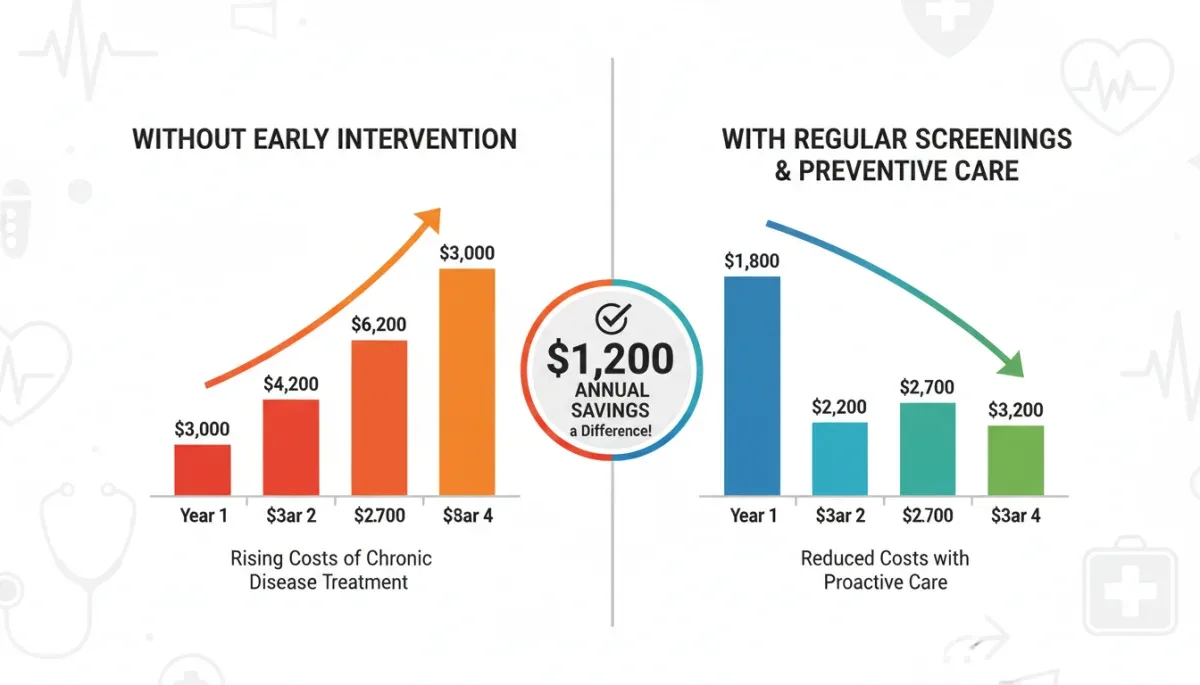
Components of the $1,200 saving
- Reduced medication costs: Early intervention often means less complex or no medication needed, or cheaper generic options compared to advanced-stage treatments.
- Avoidance of high-cost procedures: Preventing conditions from worsening can eliminate the need for surgeries, specialized therapies, and long-term hospitalizations.
- Lower insurance premiums and deductibles: Healthier individuals may benefit from lower premiums in certain insurance models, and they are less likely to hit high deductibles or out-of-pocket maximums.
- Increased productivity: Good health reduces sick days, leading to sustained employment and income, which indirectly contributes to household financial stability.
The $1,200 saving is a conservative estimate, highlighting the significant financial advantage of prioritizing preventive health measures in every household's budget.
Government Initiatives and Insurance Coverage for Preventive Care
Recognizing the immense value of preventive health, both government initiatives and private insurance providers have increasingly emphasized coverage for early detection services. These efforts aim to reduce the overall healthcare burden by promoting healthier populations and mitigating the costs associated with advanced disease treatment.
The Affordable Care Act (ACA), for example, mandates that most private health insurance plans cover a range of preventive services without co-payments or deductibles. This includes screenings for various cancers, diabetes, high blood pressure, and cholesterol, as well as immunizations and counseling for healthy living. Medicare and Medicaid also offer extensive coverage for preventive care, making these services accessible to a broad segment of the US population.
How policies support preventive health
- No-cost preventive services: Many essential screenings and vaccinations are covered at 100% by insurance plans, removing financial barriers to early detection.
- Public health campaigns: Government agencies often run campaigns to educate the public about the importance of preventive care and provide resources for screenings.
- Community health programs: Local and state governments fund programs that offer free or low-cost health screenings and wellness initiatives to underserved communities.
Understanding and utilizing these available resources is crucial for maximizing the financial and health benefits of early detection, ensuring that more households can realize the average $1,200 annual saving.
Strategies for Incorporating Preventive Health into Your Lifestyle
Integrating preventive health into daily life doesn't require drastic overhauls but rather consistent, small steps that collectively contribute to significant long-term benefits. These strategies are not just about avoiding illness but about fostering a lifestyle that prioritizes well-being and, by extension, financial resilience.
Starting with regular check-ups is paramount, scheduling them annually to stay ahead of potential issues. Beyond medical appointments, adopting a balanced diet rich in fruits, vegetables, and whole grains, coupled with regular physical activity, forms a strong foundation. Quitting smoking, moderating alcohol consumption, and managing stress effectively also play crucial roles in preventing numerous health problems that could lead to substantial financial outlays.
Practical tips for a healthier, wealthier life
- Schedule routine check-ups: Make annual physicals, dental cleanings, and eye exams non-negotiable appointments.
- Embrace a balanced diet: Focus on whole foods and limit processed items to maintain a healthy weight and reduce chronic disease risks.
- Stay physically active: Aim for at least 150 minutes of moderate-intensity exercise per week to boost cardiovascular health and mood.
- Prioritize mental well-being: Practice stress-reducing techniques like meditation, engage in hobbies, and seek professional help if needed.
- Utilize employer wellness programs: Many workplaces offer incentives and resources for health and wellness, which can include free screenings or fitness memberships.
By consciously adopting these strategies, individuals and families can proactively manage their health, reduce future medical expenses, and contribute to the impressive average annual saving of $1,200.
| Key Aspect | Financial Impact |
|---|---|
| Preventive Screenings | Avoids costly advanced disease treatments. |
| Early Diagnosis | Enables less invasive, cheaper interventions. |
| Government & Insurance Coverage | Reduces out-of-pocket costs for essential care. |
| Healthy Lifestyle | Minimizes sick days and long-term healthcare needs. |
Frequently Asked Questions About Early Detection and Savings
How does early detection save money for US households?▼Early detection saves money by identifying health issues at treatable stages, reducing the need for expensive, advanced medical procedures, prolonged hospital stays, and extensive medication regimens. It also minimizes lost income from missed workdays.
What types of preventive health services are covered by insurance?▼Most insurance plans, especially under the ACA, cover a wide range of preventive services at no extra cost. This includes annual physicals, various cancer screenings (mammograms, colonoscopies), blood pressure and cholesterol checks, and immunizations.
Can lifestyle changes truly impact healthcare costs?▼Absolutely. Healthy lifestyle choices like a balanced diet, regular exercise, and avoiding smoking can prevent chronic diseases such as diabetes and heart disease. Preventing these conditions significantly reduces long-term healthcare expenditures and medication costs.
Is the $1,200 annual saving an average across all households?▼Yes, the $1,200 figure represents an average annual saving across US households. Individual savings can vary based on specific health conditions, insurance coverage, and engagement in preventive care, but the overall trend demonstrates substantial financial benefits.
Where can I find resources for affordable preventive care?▼You can find resources through your health insurance provider's website, local public health departments, community health centers, and employer wellness programs. Many organizations offer free or low-cost screenings and educational materials on preventive health.
Conclusion
The evidence overwhelmingly supports the notion that prioritizing preventive health and early detection is not just a medical imperative but a sound financial strategy for US households. The average annual saving of $1,200 underscores the tangible economic benefits of proactive health management. By embracing routine screenings, adopting healthy lifestyles, and leveraging available insurance and government programs, families can safeguard both their well-being and their financial stability. Investing in health today is investing in a more secure and prosperous tomorrow.