Mind-Muscle Connection: Boost Workouts 30% More Effectively
Advertisements
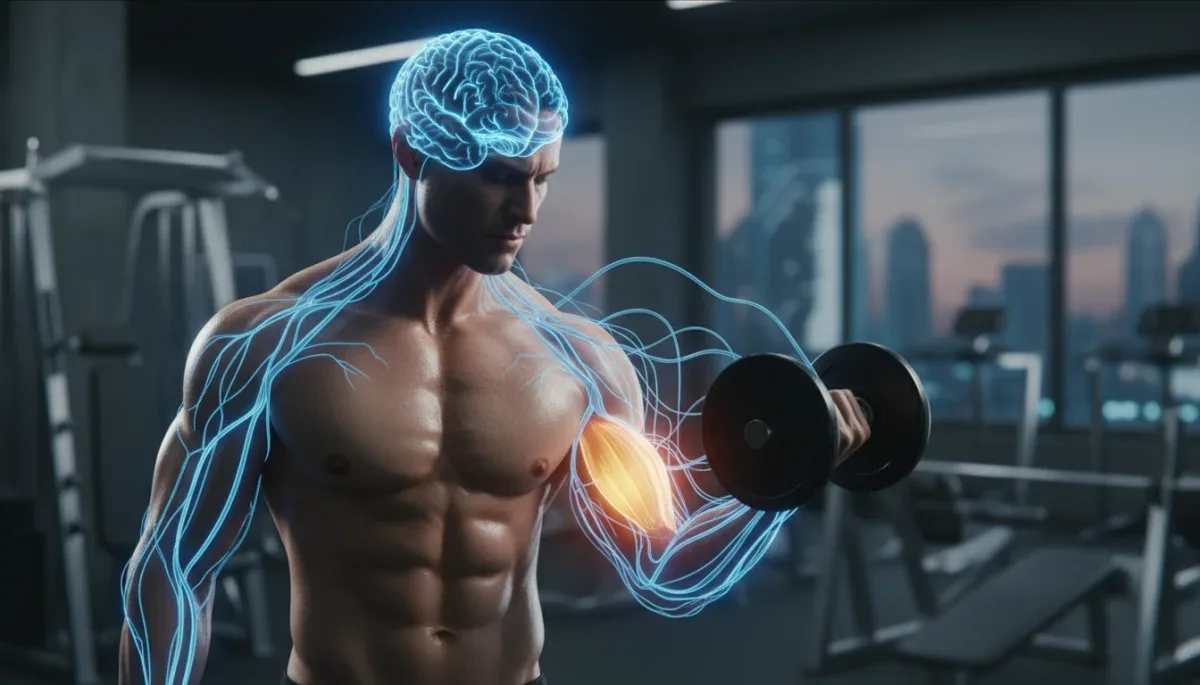
The mind-muscle connection is a powerful technique that involves consciously focusing on the contraction of a target muscle during exercise, leading to greater activation and potentially up to 30% more effective workouts.
Have you ever felt like you're just going through the motions in your workouts? The secret to unlocking significant gains might lie in something more profound than just lifting heavy: the mind-muscle connection. This powerful concept can revolutionize your training, helping you activate specific muscles more effectively and potentially making your workouts up to 30% more impactful.
understanding the mind-muscle connection
The mind-muscle connection refers to the conscious and deliberate focus on the muscle you are working during an exercise. It's about feeling the muscle contract and extend, rather than just moving the weight from point A to point B. This mental engagement can significantly increase muscle fiber recruitment, leading to enhanced growth and strength.
For decades, bodybuilders have intuitively used this technique, often describing it as 'feeling the squeeze.' Modern exercise science now provides empirical evidence supporting its efficacy, showing that a strong mind-muscle connection can indeed lead to superior results compared to simply lifting without conscious focus.
the science behind the link
Research indicates that when you concentrate on a specific muscle, your brain sends stronger signals to that muscle, increasing the number of motor units activated. This heightened neural drive results in a more complete and efficient contraction of the target muscle. It's not just about lifting; it's about lifting with purpose.
- Enhanced muscle fiber recruitment
- Improved muscle activation patterns
- Greater hypertrophy potential
- Better form and injury prevention
Ultimately, understanding and applying the mind-muscle connection means transforming your workout from a mechanical task into a highly targeted and efficient physiological process. It bridges the gap between effort and results, allowing you to maximize each repetition.
the benefits of a strong mind-muscle connection
Integrating the mind-muscle connection into your routine offers a multitude of advantages beyond just increased muscle growth. It’s a holistic approach to training that impacts performance, recovery, and even your overall body awareness. These benefits contribute to a more sustainable and rewarding fitness journey.
One of the most compelling benefits is the potential for increased muscle hypertrophy. When you effectively engage the target muscle, you create more micro-trauma, which is essential for muscle repair and growth. This focused damage signals the body to adapt and build stronger, larger muscle fibers.
optimized muscle growth and strength
By ensuring the target muscle is doing the majority of the work, you prevent other, stronger muscle groups from taking over. This isolation leads to more specific and efficient training, which is crucial for addressing muscle imbalances and promoting symmetrical development. It’s about quality over quantity in every rep.
- Improved muscle aesthetics and symmetry
- Breakthrough strength plateaus
- Enhanced athletic performance in specific movements
Furthermore, a strong mind-muscle connection can lead to better injury prevention. When you are acutely aware of how your muscles are moving and contracting, you are more likely to maintain proper form and identify any compensatory movements that could lead to strain or injury. This heightened proprioception is invaluable for long-term health.
how to cultivate your mind-muscle connection
Developing a strong mind-muscle connection is a skill that improves with practice, much like any other aspect of your training. It requires patience, focus, and a willingness to experiment with different techniques. The initial steps involve slowing down and truly listening to your body's feedback.
Begin by reducing the weight you are lifting. This might seem counterintuitive, but using lighter loads allows you to focus on the contraction without the overwhelming demand of heavy resistance. The goal is to feel the muscle working, not just to move the weight. Quality of movement always trumps quantity of weight when building this connection.
practical techniques for activation
Visualization is a powerful tool. Before starting an exercise, visualize the target muscle contracting and extending. Imagine the muscle fibers shortening and lengthening with each repetition. This mental rehearsal primes your nervous system for effective engagement.
- Slow and controlled movements: Eliminate momentum and focus on the peak contraction.
- Tactile cues: Lightly touch or place a hand on the muscle you are trying to activate to enhance sensory feedback.
- Squeeze and hold: At the peak of contraction, hold the position for a brief moment to maximize muscle fiber engagement.
Another effective strategy is to perform warm-up sets with very light weight, or even just bodyweight, solely focusing on the contraction. This helps establish the neural pathway before you introduce heavier loads. Consistency in these practices will gradually strengthen your ability to connect with your muscles.
applying the connection to specific exercises
The mind-muscle connection isn't a one-size-fits-all technique; its application varies depending on the exercise and the muscle group involved. Understanding these nuances can significantly improve your ability to target specific areas and achieve optimal results. Each exercise presents a unique challenge for mental focus.
For example, when performing a bicep curl, instead of simply lifting the dumbbell, concentrate on squeezing your bicep at the top of the movement. Feel the muscle bulge and contract. For squats, focus on driving through your heels and engaging your glutes and quads throughout the entire range of motion, rather than just standing up.

targeted muscle activation strategies
For compound movements like deadlifts or bench presses, it can be challenging to isolate one muscle. In these cases, focus on the primary movers and ensure they are initiating and driving the movement. For a bench press, think about pushing with your chest, not just your arms.
- Chest exercises: Focus on squeezing your pecs together, imagining they are contracting to pull your arms across your body.
- Back exercises: Concentrate on pulling with your lats, envisioning your shoulder blades retracting and depressing.
- Leg exercises: For squats and lunges, drive through your heels to engage glutes and hamstrings, and focus on your quads for leg extensions.
By consistently applying these targeted activation strategies, you will develop a deeper understanding of how your body moves and how to make each exercise count. This deliberate practice transforms general movements into highly effective muscle-building actions.
common pitfalls and how to overcome them
While the mind-muscle connection is a powerful tool, many individuals encounter common challenges when trying to implement it. Recognizing these hurdles and understanding how to navigate them is crucial for consistent progress and maximizing your training effectiveness. It's a learning curve that requires persistence.
One frequent pitfall is using too much weight. When the load is excessive, your body naturally resorts to recruiting as many muscles as possible to complete the lift, often sacrificing the targeted muscle's isolation. This makes it incredibly difficult to feel the intended muscle working.
troubleshooting your connection
Another challenge is impatience. Developing a strong mind-muscle connection takes time and repeated effort. Don't get discouraged if you don't feel it immediately. Consistency in your practice will gradually build the neural pathways necessary for enhanced activation.
- Reduce distractions: Minimize external stimuli like phones or loud music that can break your focus.
- Seek feedback: Ask a trainer or experienced lifter to observe your form and provide external cues.
- Experiment with variations: Sometimes, a slight change in grip, stance, or exercise variation can help you better isolate the target muscle.
Overcoming these pitfalls involves a combination of mindful practice, adjusting your approach, and staying patient. Remember that the goal is not just to lift a weight, but to consciously control and feel the muscle doing the work. This deliberate effort will ultimately lead to more profound and lasting results.
integrating mind-muscle into your full routine
Successfully integrating the mind-muscle connection into your entire workout routine requires a strategic approach. It's not about being hyper-focused on every single rep of every single set, but rather about selectively applying the technique where it will yield the most significant benefits. This intelligent application optimizes both effort and results.
Start by dedicating the first set or two of each exercise to establishing that connection. Use a lighter weight to really dial into the feel of the muscle contracting. Once you've established that connection, you can gradually increase the weight while striving to maintain that same level of muscle awareness.
strategic application for optimal gains
For compound movements where heavy lifting is often prioritized, focus on the mind-muscle connection during your warm-up sets and perhaps the initial working sets. For isolation exercises, where the goal is to specifically target a single muscle, maintain a strong mind-muscle connection throughout all sets to maximize hypertrophy.
- Prioritize connection in isolation exercises.
- Use warm-up sets to establish the connection for compound lifts.
- Integrate short pauses at peak contraction.
- Regularly assess and adjust your focus based on muscle feedback.
By thoughtfully weaving the mind-muscle connection into your training, you transform your workouts from a series of movements into a highly effective, purposeful endeavor. This sustained effort will not only lead to enhanced physical development but also a deeper understanding and appreciation of your body's capabilities.
| Key Aspect | Brief Description |
|---|---|
| Definition | Conscious focus on a specific muscle during exercise for enhanced activation. |
| Benefits | Increased muscle growth, better form, injury prevention, improved performance. |
| Techniques | Lower weight, slow movements, visualization, tactile cues, peak contraction holds. |
| Integration | Focus on isolation exercises, use warm-ups for compound lifts, consistent practice. |
frequently asked questions about mind-muscle connection
What exactly is the mind-muscle connection?▼It's the conscious effort to focus your mental attention on a specific muscle contracting during an exercise. This mental link enhances neural drive to the target muscle, leading to increased activation and more effective muscle stimulation.
How can I start developing my mind-muscle connection?▼Begin by reducing the weight you lift to prioritize form and sensation. Practice slow, controlled movements, visualize the muscle working, and even touch the muscle to improve sensory feedback during contractions.
Does the mind-muscle connection really make a difference?▼Yes, studies suggest it can significantly increase muscle activation and hypertrophy. By consciously engaging the target muscle, you recruit more muscle fibers, potentially leading to greater growth and strength gains over time.
Is it better to focus on mind-muscle connection or lift heavy?▼Ideally, a balance of both. Start with lighter weights to establish the connection, then gradually increase load while striving to maintain that muscle awareness. For compound lifts, use it in warm-ups; for isolation, maintain it throughout.
Can the mind-muscle connection help prevent injuries?▼Absolutely. By being more aware of your muscle contractions and movement patterns, you can better maintain proper form, identify compensatory movements, and reduce the risk of strain or injury during your workouts.
conclusion
Embracing the mind-muscle connection is more than just a technique; it's a paradigm shift in how you approach your fitness journey. By consciously engaging with your body and focusing your mental energy on specific muscle activation, you unlock a profound potential for growth, strength, and overall athletic improvement. This disciplined practice not only makes your workouts significantly more effective but also fosters a deeper understanding and appreciation of your body's capabilities. Make this mental discipline a cornerstone of your training, and watch as your physical results, and your connection to your own strength, reach new heights.