Setting Realistic Fitness Goals: Your 5-Step Plan
Advertisements

Setting realistic fitness goals is crucial for long-term success, providing a structured approach to achieve sustainable health improvements and avoid common pitfalls by December 2026.
Are you ready to transform your health but feel overwhelmed by ambitious targets? Setting realistic fitness goals is the cornerstone of any successful and sustainable health journey, guiding you toward tangible results by December 2026. This comprehensive guide will walk you through a practical 5-step plan designed to help you not only achieve your fitness aspirations but also maintain them long-term.
Understanding the Importance of Realistic Goals
Before diving into the 'how,' it's vital to grasp the 'why' behind realistic goal setting. Many fitness journeys falter not due to a lack of effort, but because the initial goals were simply unattainable or unsustainable. Setting unrealistic expectations can quickly lead to frustration, burnout, and ultimately, giving up. Realistic goals, conversely, foster consistency, celebrate small victories, and build lasting habits.
It’s about creating a roadmap that acknowledges your current capabilities, lifestyle, and commitments. This foundational understanding prevents the common trap of comparing yourself to others or striving for immediate, drastic changes that are often short-lived. Your fitness journey is personal, and your goals should reflect that individuality.
Avoiding the Pitfalls of Overly Ambitious Targets
The fitness industry often promotes rapid transformations, which can be misleading. While inspiring, these often involve extreme measures that are neither healthy nor sustainable for most people. An overly ambitious target, like losing 30 pounds in a month, can be detrimental to both physical and mental health.
- Burnout: Intense, unsustainable routines lead to physical and mental exhaustion.
- Injury Risk: Pushing your body too hard too fast increases the likelihood of injury.
- Demotivation: Failing to meet unrealistic goals can severely impact your motivation.
- Unhealthy Habits: Extreme diets or exercise can lead to disordered eating or exercise patterns.
A realistic approach ensures that your goals are challenging yet achievable, keeping you engaged and motivated throughout the process. This foundation sets the stage for a positive and enduring relationship with fitness.
Step 1: Assess Your Current Fitness Level and Lifestyle
The first critical step in setting realistic fitness goals is to honestly evaluate where you are right now. This isn't about judgment, but about gathering accurate data to inform your plan. Understanding your starting point is essential for charting a course that is both effective and sustainable. Consider your current physical condition, daily routines, and any existing health concerns.
This assessment involves more than just stepping on a scale. It includes looking at your activity levels, dietary habits, sleep patterns, and stress management techniques. A holistic view provides a clearer picture of what changes are feasible and where you might need to allocate more attention.
Conducting a Personal Fitness Audit
Start by documenting your current physical activity. How often do you exercise? What types of exercises do you do? How long do they last? Be specific. Next, consider your diet. Are you consuming balanced meals? How often do you eat out? What are your typical portion sizes? Sleep quality and quantity are also crucial, as they significantly impact recovery and energy levels.
- Physical Activity: Track your workouts, daily steps, and overall movement for a week.
- Dietary Habits: Keep a food diary to identify patterns and areas for improvement.
- Sleep Schedule: Monitor your sleep duration and quality using a tracker or journal.
- Stress Levels: Reflect on your typical stress triggers and coping mechanisms.
Consulting with a healthcare professional or a certified fitness trainer can provide valuable insights and a more objective assessment. They can help identify any underlying health issues or physical limitations that might influence your goal setting, ensuring your plan is safe and appropriate for you.
Step 2: Define SMART Goals for December 2026
Once you have a clear understanding of your starting point, the next step is to define your goals using the SMART framework: Specific, Measurable, Achievable, Relevant, and Time-bound. This framework transforms vague aspirations into concrete, actionable plans, making the process of setting realistic fitness goals much more effective. Applying SMART principles ensures that your objectives are well-defined and trackable.
Without SMART goals, it's easy to lose focus or become demotivated when progress isn't immediately apparent. By December 2026, you want to look back and see clear achievements, not just good intentions. This structured approach helps break down larger objectives into manageable steps, increasing your likelihood of success.
Breaking Down the SMART Framework
- Specific: Instead of 'get fit,' aim for 'run a 5k race in under 30 minutes.'
- Measurable: How will you track progress? 'Lose 10 pounds' is measurable; 'feel better' is not.
- Achievable: Is the goal realistic given your current level and resources? Losing 50 pounds in a month is unlikely.
- Relevant: Does the goal align with your overall health and lifestyle aspirations?
- Time-bound: Set a clear deadline, like 'by December 2026,' to create urgency and focus.
For example, if your overall goal is to improve cardiovascular health, a SMART goal might be: 'I will be able to run for 30 minutes continuously without stopping by December 2024, by consistently training three times a week and increasing my running duration by 5% each week.' This level of detail makes the goal actionable and provides a clear path forward.
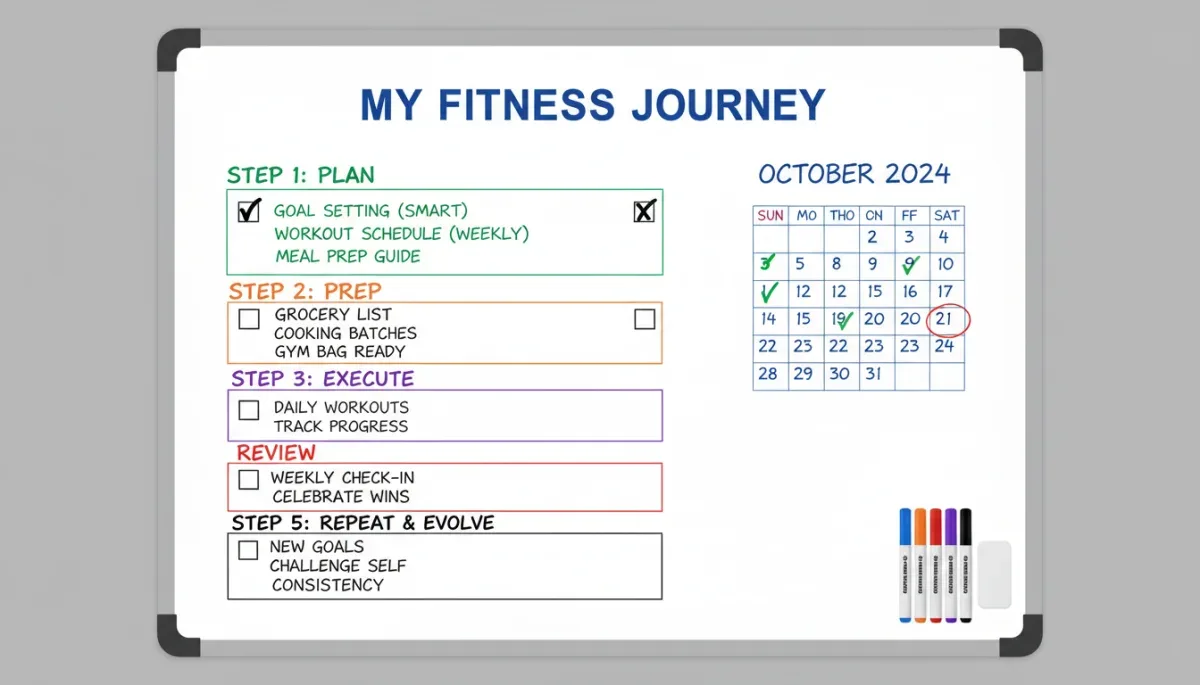
Step 3: Develop a Personalized Action Plan
With your SMART goals firmly established, it's time to build a detailed action plan. This involves outlining the specific steps you will take to achieve your objectives, including exercise routines, dietary adjustments, and lifestyle changes. A well-structured plan acts as your daily guide, ensuring consistency and progress toward your December 2026 targets. It transforms your goals from abstract ideas into concrete tasks.
Your personalized action plan should be flexible enough to adapt to life's inevitable challenges, yet structured enough to keep you on track. It's about finding a routine that integrates seamlessly into your life, rather than feeling like an additional burden. This step emphasizes proactive planning over reactive decision-making.
Crafting Your Exercise Routine
Based on your fitness assessment and SMART goals, design an exercise schedule that incorporates a variety of activities. Aim for a mix of cardiovascular exercises, strength training, and flexibility work. Consider your preferences and what you enjoy, as this will increase adherence.
- Cardio: Running, swimming, cycling, or brisk walking for 30-60 minutes, 3-5 times a week.
- Strength Training: Bodyweight exercises, free weights, or resistance bands, 2-3 times a week.
- Flexibility: Yoga, stretching, or Pilates for 15-20 minutes, 2-3 times a week.
- Rest Days: Crucial for muscle recovery and preventing overtraining; schedule at least 1-2 per week.
Beyond exercise, your plan should address nutrition. Focus on whole, unprocessed foods, adequate hydration, and mindful eating. Small, consistent changes to your diet are often more sustainable than drastic overhauls. Incorporate strategies for managing stress and ensuring sufficient sleep, as these elements are equally vital for overall well-being and goal achievement.
Step 4: Implement, Track, and Adjust Your Progress
An action plan is only as good as its implementation. This step focuses on putting your plan into motion, diligently tracking your progress, and being prepared to make necessary adjustments along the way. Consistent execution and regular monitoring are key to staying motivated and ensuring you are on the right path to achieving your realistic fitness goals by December 2026. This iterative process allows for continuous improvement and adaptation.
Tracking your progress provides tangible evidence of your efforts, which can be a powerful motivator. It also helps identify what's working and what isn't, enabling you to refine your approach. Don't be afraid to adjust your plan; fitness journeys are rarely linear, and flexibility is essential for long-term success.
Tools and Strategies for Effective Tracking
Leverage technology and traditional methods to monitor your journey. Fitness apps, smartwatches, and simple journals can all be effective. The key is to find a system that you can consistently use and that provides meaningful insights.
- Fitness Apps: MyFitnessPal, Strava, or Apple Health to log workouts, nutrition, and biometrics.
- Workout Journal: Record exercises, sets, reps, weights, and perceived effort.
- Progress Photos: Take monthly photos to visually track physical changes.
- Body Measurements: Periodically measure waist, hips, arms, etc., to track non-scale victories.
Regularly review your progress against your SMART goals. If you're consistently missing targets or feeling overly challenged, it might be time to re-evaluate if your goals are still realistic or if your plan needs modification. Conversely, if you're exceeding expectations, consider setting new, slightly more challenging mini-goals to maintain momentum. This dynamic approach keeps your journey fresh and engaging.
Step 5: Cultivate Consistency and Long-Term Sustainability
Achieving your fitness goals by December 2026 is a significant milestone, but true success lies in maintaining those results and continuing your healthy lifestyle beyond the deadline. The final step is about embedding consistency into your daily life and fostering habits that ensure long-term sustainability. This transition from goal achievement to lifestyle integration is where many people falter, but with the right mindset and strategies, it's entirely achievable. It's about making fitness an intrinsic part of who you are.
Sustainability means creating routines that you genuinely enjoy and that fit seamlessly into your life, rather than feeling like a chore. It involves understanding that fitness is a journey, not a destination, and that there will always be new challenges and opportunities for growth. This step emphasizes building a resilient and adaptable approach to your well-being.
Strategies for Lasting Fitness Habits
Focus on habit formation rather than just outcome chasing. Small, consistent actions build powerful routines over time. Celebrate your successes, learn from setbacks, and continuously seek ways to make healthy choices easier and more enjoyable.
- Find Your Tribe: Join a fitness community, find a workout buddy, or engage with online groups for support and accountability.
- Vary Your Routine: Prevent boredom and plateaus by trying new exercises, sports, or classes.
- Prioritize Recovery: Adequate sleep, proper nutrition, and stress management are non-negotiable for sustained performance.
- Mindful Eating: Pay attention to hunger and fullness cues, and enjoy food without guilt.
- Set New Challenges: Once a goal is met, set a new, slightly different one to keep yourself engaged and progressing.
Remember that setbacks are a normal part of any journey. Instead of viewing them as failures, see them as opportunities to learn and adjust. Develop coping mechanisms for when motivation wanes or life throws unexpected curveballs. By cultivating a mindset of continuous improvement and self-compassion, you can ensure your fitness journey is not just successful by December 2026, but truly lasts a lifetime.
Overcoming Common Challenges on Your Fitness Journey
Even with the best-laid plans for setting realistic fitness goals, challenges are inevitable. Life happens, motivation ebbs and flows, and progress isn't always linear. Recognizing these common hurdles and developing strategies to overcome them is crucial for maintaining momentum and ensuring long-term success. Proactive problem-solving can turn potential roadblocks into minor detours on your path to December 2026 and beyond.
It's important to approach these challenges with resilience and a problem-solving mindset rather than allowing them to derail your entire effort. Understanding that everyone faces difficulties can also provide a sense of camaraderie and reduce feelings of isolation.
Strategies for Sustained Motivation and Progress
One of the biggest challenges is maintaining motivation, especially when results seem slow or life gets busy. Developing intrinsic motivation, where your drive comes from within, is more powerful than relying solely on external factors.
- Time Constraints: Break workouts into shorter, more frequent sessions (e.g., three 10-minute walks instead of one 30-minute session).
- Lack of Motivation: Revisit your 'why,' reward small achievements, and try new activities to reignite interest.
- Plateaus: Adjust your routine by increasing intensity, changing exercises, or seeking professional guidance to break through.
- Injury: Consult a healthcare professional, focus on recovery, and adapt your routine to work around the injury safely.
Building a strong support system can also make a significant difference. Share your goals with friends or family, consider working with a personal trainer, or join a local fitness group. Having people who encourage you and hold you accountable can provide invaluable support during tough times. Remember, consistency beats intensity every time, and small, steady efforts accumulate into significant results over time.
| Key Step | Brief Description |
|---|---|
| Assess Current Level | Evaluate current fitness, lifestyle, and health to establish a realistic starting point. |
| Define SMART Goals | Create Specific, Measurable, Achievable, Relevant, Time-bound objectives for clarity. |
| Personalized Action Plan | Develop detailed exercise, diet, and lifestyle strategies tailored to your goals. |
| Track & Adjust | Monitor progress regularly and be flexible to adapt your plan as needed. |
Frequently Asked Questions About Fitness Goals
How long should it take to see fitness results?▼Visible fitness results typically take 4-8 weeks to appear, depending on the intensity of your routine, consistency, and individual body composition. Significant changes often require 3-6 months of dedicated effort. Patience and consistency are more important than speed.
Is it better to focus on weight loss or strength gain first?▼It often depends on your primary goal and current fitness level. Many experts suggest combining both, as strength training helps build muscle, which boosts metabolism and aids in fat loss. Prioritizing strength can also improve overall body composition and functional fitness.
How can I stay motivated when I feel like giving up?▼When motivation wanes, revisit your 'why' – the core reason you started. Break your goals into smaller, more manageable steps, celebrate small victories, and consider finding a workout partner or joining a supportive community. Remember that consistency is key.
What role does nutrition play in achieving fitness goals?▼Nutrition plays a paramount role, often being 70-80% of your fitness success. Proper diet fuels your workouts, aids muscle recovery, and is crucial for weight management. Without adequate and balanced nutrition, even the most rigorous exercise routine may not yield desired results.
Can I achieve significant fitness goals without a gym membership?▼Absolutely. Many effective fitness routines can be done at home with minimal equipment or using just your body weight. Running, cycling, yoga, and various bodyweight exercises provide excellent workouts. Consistency and proper form are more critical than the location of your workout.
Conclusion
Setting realistic fitness goals is not merely about achieving a specific outcome; it's about fostering a sustainable, healthy lifestyle that enriches your life long-term. By following this 5-step plan – assessing your current state, defining SMART goals, developing a personalized action plan, consistently tracking and adjusting, and cultivating long-term habits – you are equipping yourself with the tools for genuine, lasting success. Remember, your fitness journey is a marathon, not a sprint. Embrace the process, celebrate every small victory, and by December 2026, you will undoubtedly look back on a period of profound personal growth and improved well-being. Start today, stay consistent, and build the healthier future you envision.